
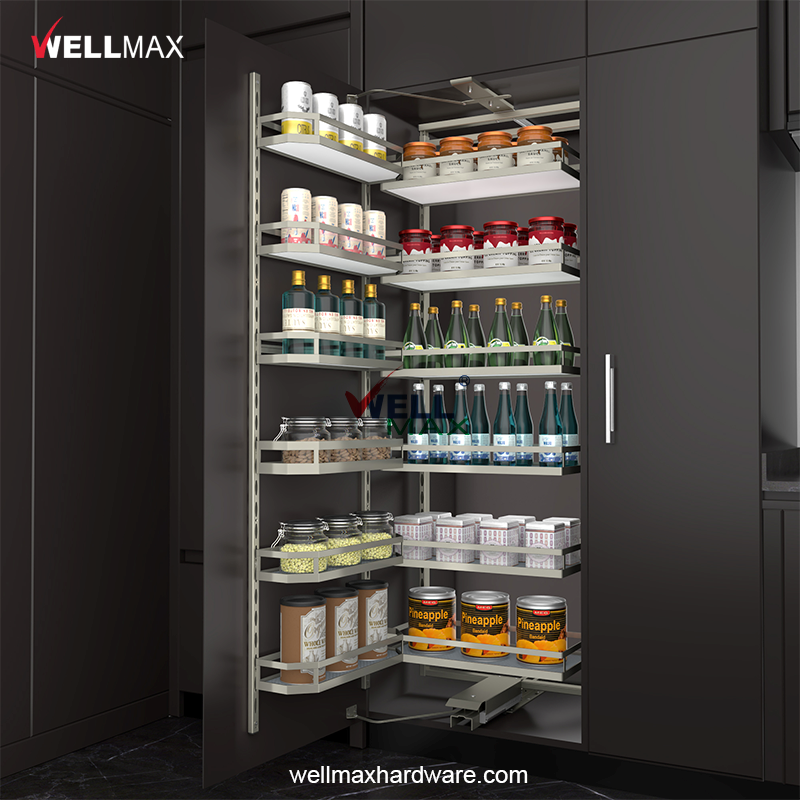
Group by Function: Align Kitchen Baskets with Core Cooking Workflows
Prep, Cook, Serve, Clean, and Pantry Zones—Mapping Baskets to Task-Based Workflow
Organizing the kitchen around five main work areas can really cut down on wasted time when cooking. Each area gets its own basket setup depending on how often certain tasks happen and what tools go together. For chopping and prepping food, keep cutting boards, sharp knives, and mixing bowls in open baskets right next to the counter space. Near the stove top, heat resistant containers make sense for storing pots, cooking utensils, and spice jars so everything stays within reach. Dishes and table linens belong in baskets near where meals get served. Those hard to reach spaces under sinks are perfect for cleaning supplies like scrub brushes and garbage bags. And don't forget about the pantry area where baskets help keep cereal boxes, pasta packages, and other dry goods visible instead of buried at the back. According to research from the National Kitchen & Bath Association, this kind of layout cuts down on unnecessary movement by almost half during meal prep, which makes a huge difference over time.
Why Functional Grouping Boosts Efficiency: Data from the 2023 NKBA Survey and Small-Kitchen Adaptations
Organizing kitchen baskets around functions really helps cut down on decision fatigue and makes small kitchens work better than they otherwise would. According to the NKBA's 2023 survey, when people organize their stuff based on tasks rather than random placement, meal prep takes about 30% less time in apartments smaller than 500 square feet. Putting everything related to a particular activity in one basket means folks find what they need about twice as fast. For those tight spaces where every inch counts, stacking baskets with built-in dividers saves room but still keeps different areas separate. Most people who live in these tiny kitchens complain about running back and forth between zones all the time, which happens in roughly four out of five micro kitchens according to surveys. Some clever solutions include mounting baskets on walls to store pantry goods, giving easy access without taking up precious counter real estate.
Optimize for Daily Routines: Meal-Type and Occasion-Based Kitchen Basket Systems
Breakfast, Grab-and-Go, Party, and Meal-Prep Baskets—Design Principles and Space-Smart Implementation
Organizing kitchen baskets based on how often we actually use them can really cut down on time spent searching through clutter. Breakfast stuff should go where it's easy to reach when rushing out the door in the morning, so maybe keep those cereal boxes and coffee pods within arm's reach of the coffee maker. Shallow bins work great for grabbing lunchbox contents or afternoon snacks without having to bend over too much. When hosting gatherings, some clever container solutions make life easier. Just think about those plastic bins that double as both storage and serving platters during dinner parties. They save space and look pretty good while doing it. A few smart organizational tricks like these transform what would otherwise be chaotic kitchen spaces into something functional and efficient.
- Stack nesting baskets vertically in pantry gaps
- Label translucent containers for instant identification
- Mount slide-out trays under countertops for infrequent items
This approach reduces time spent searching by 37% in compact kitchens, according to efficiency studies.
Real-World Impact: Reducing Decision Fatigue in Micro-Kitchens Through Purpose-Built Baskets
Kitchen baskets organized by purpose cut down on those annoying decision moments when life gets busy. When someone has a container specifically for meal prep with all the ingredients already measured out, it makes figuring out what to cook so much easier. People living in small kitchens really benefit from this setup. Some studies point to folks making about 25 fewer organizational decisions each day when their storage is properly arranged. Assigning specific baskets for things like packing after school snacks or gathering ingredients for weekend baking takes a real weight off the brain. Instead of wasting time searching high and low for stuff, cooks can actually focus on coming up with new recipes and enjoying the process instead.
Match Basket Type to Content: Material, Size, and Structure for Long-Term Kitchen Basket Utility
When picking out kitchen baskets, it really matters what they're going to hold because this affects how long they last and makes things easier to find. Materials count too. Stainless steel stands up well against all that kitchen humidity, but if someone wants something greener, bamboo works great. The stuff naturally fights mold so these baskets tend to stay good about 40 percent longer than regular wood ones without treatment. Plastic or metal with coating is better near sinks where everything gets damp. Size plays a big role in usefulness: small baskets below 20 liters work for spices and tools, medium sized ones between 20 and 40 liters handle cans pretty well, and anything over 50 liters? Those are perfect for storing big bags of flour or other bulk items. Going with standard sizes saves cabinet space vertically. How baskets are built determines their function too. Handles on baskets make reaching into those deep cabinets much easier. Tilt front designs let people see what's inside without pulling everything out. Reinforced rails can take the weight of heavier pots and pans. According to some recent numbers from MoTransports in their 2024 report on organizers, getting the mix right cuts down on having to replace baskets by around 32%. When baskets match what needs storing, kitchens end up with storage systems that actually work and grow with changing needs over time.
Leverage Kitchen Baskets for Pantry Organization: Visibility, Consistency, and Retrieval Speed
Kitchen baskets really help turn those chaotic pantries into organized spaces, and they do this based on a few simple ideas that actually work. Transparent or partially see-through designs let people know what's inside without having to open every container. Studies show something interesting about this setup: households tend to waste about 20% less food when they can easily see what they already have. No more buying duplicates or letting stuff expire unnoticed. Another good trick is grouping similar items together. Maybe one basket just holds all the baking stuff, another for snacks, and yet another for breakfast essentials. Putting labels on these makes life so much easier when things get busy in the kitchen. Then there are those pull out features that make getting to deep shelf items a breeze. Instead of digging around for forever, everything slides right out. Some folks report saving around a quarter of their search time with this feature alone. Most of these baskets come in either woven or wire styles and stack nicely too, which means making better use of vertical space. Once everything fits how it should in the kitchen layout, maintaining order becomes second nature. Ingredients stay within reach and meal preparation goes faster because nothing gets lost in the clutter anymore.
FAQ
- What are the benefits of organizing kitchen baskets by function? Organizing kitchen baskets by function helps reduce wasted time, makes meal prep more efficient, and cuts down on decision fatigue, especially in small kitchens.
- How can baskets improve efficiency in small kitchens? In small kitchens, baskets grouped by task reduce meal prep time by about 30% and make it easier to find necessary items, enhancing overall kitchen functionality.
- What materials are best for kitchen baskets? Stainless steel and bamboo are excellent choices for kitchen baskets due to their durability and resistance to mold. Plastic or coated metal works well in damp environments.
- How can pantry organization reduce food waste? Transparent designs and labeling of baskets help in seeing what you have, leading to a reduction in food waste by up to 20%.
- How does grouping items in baskets aid in kitchen organization? Grouping similar items together makes it easier to find and access them, saving time and reducing clutter in the kitchen.
Table of Contents
- Group by Function: Align Kitchen Baskets with Core Cooking Workflows
- Optimize for Daily Routines: Meal-Type and Occasion-Based Kitchen Basket Systems
- Match Basket Type to Content: Material, Size, and Structure for Long-Term Kitchen Basket Utility
- Leverage Kitchen Baskets for Pantry Organization: Visibility, Consistency, and Retrieval Speed
- FAQ