
The High Cabinet Accessibility Problem: Why Traditional Storage Fails
Old fashioned high cabinets really mess with how easy kitchens are to use and can actually be pretty dangerous too. According to the National Kitchen & Bath Association, almost half (around 43%) of people have trouble getting stuff down from those upper cabinets. Standard fixed shelves push folks into awkward stretches just to grab something simple. What happens? About 28% of all cabinet space ends up going completely unused because it's just out of comfortable reach range for most people standing normally in their kitchen. And when someone does need to get something from there, they often resort to using step stools which turns out to be one of the main reasons seniors fall at home. Plus, deeper cabinets hide what's inside making it harder to spot what we're looking for. All these issues basically wreck kitchen workflow and make cooking miserable for anyone who isn't exactly average height or has full mobility.
How a Pull Down Shelf Solves the Problem: Mechanism, Ergonomics, and Safety
Core Operation: Gas-Spring vs. Cable-Pulley Actuation Systems
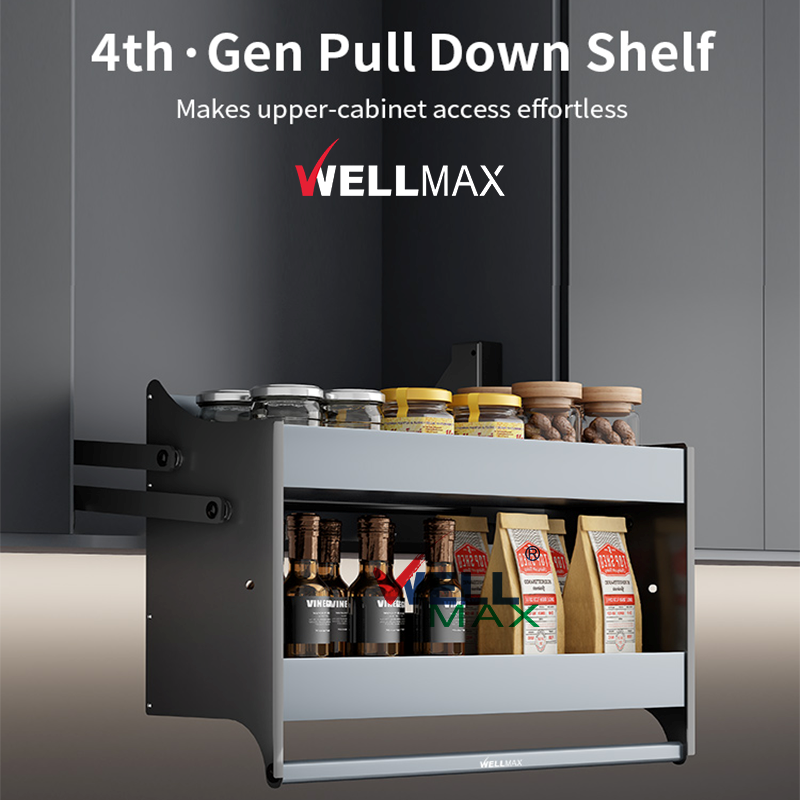
Pull down shelves make those hard to reach storage spots accessible thanks mainly to two different systems: gas springs and cable pulleys. The gas spring models work by using nitrogen filled cylinders that let the shelf come down smoothly and controlled, with some damping adjustment so they won't drop suddenly. These are great for heavier stuff, maybe around 20-25 pounds before things get too much. Cable pulley versions instead rely on steel cables under tension plus some weights to balance things out. They tend to be cheaper initially but need checking every now and then for wear and tear. When installed properly, both types attach firmly to the sides of cabinets via metal arms and bracket assemblies. Just give them a light tug downwards and voilà! The shelf moves straight up and down without any wobbling. No more climbing ladders or straining to grab items from high places, yet the shelves stay stable throughout their entire range of movement.
Ergonomic Benefits: Bringing Items Within Safe Reach Zone (24"–48" Vertical Range)
When we move items into the sweet spot between 24 and 48 inches from the floor - what most people can comfortably reach without stretching too far - these pull down shelves eliminate dangerous overhead reaching situations. Studies show this setup cuts shoulder strain by about two thirds compared to grabbing things from high shelves, and it also slashes slip and fall accidents by roughly four fifths since nobody needs to climb on wobbly step stools anymore. The shelves come with self leveling bases so stuff stays put when coming down, plus special grips make it easier for folks with mobility issues to grab what they need. What makes this system really stand out is how it works for everyone regardless of their height or physical capabilities. Those top cabinets that usually go unused now become valuable storage space instead of just gathering dust, which fits right into modern accessibility standards but feels much more practical than just talking about design theory.
Retrofitting a Pull Down Shelf into Existing High Cabinets: Feasibility and Best Practices
Retrofitting pull down shelves into existing high cabinets is a practical upgrade that enhances accessibility without requiring full cabinet replacement. Most standard cabinet configurations support this modification when key compatibility factors are verified. Professional installers recommend thorough measurements before selection to avoid structural issues.
Compatibility Checklist: Cabinet Depth, Clearance, and Mounting Requirements
Verify these critical dimensions before installation:
- Cabinet Depth: Minimum interior depth of 12 inches is typically required to accommodate the mechanism.
- Vertical Clearance: Allow 2–4 inches above the shelf for full retraction, measured from cabinet top to shelf surface.
- Mounting Surface: Side walls must be sturdy enough to support loaded hardware; frameless designs often need reinforcement brackets.
- Weight Capacity: Match shelf ratings (usually 15–25 lbs) to intended contents to prevent mechanism strain. Cross-check manufacturer specifications against your cabinet’s internal width and shelf cutout dimensions.
Proven Impact: Measurable Gains in Safety, Usability, and Inclusive Design
Real-World Outcomes: Injury Reduction, User Satisfaction, and ADA-Aligned Performance
Pull down shelves make reaching stuff in tall cabinets much easier because they bring items down to where most people can comfortably grab them, around 24 to 48 inches off the ground. Studies have found that homes with these systems see about 40% fewer falls happening, plus less strain on backs and shoulders when people don't have to stretch so far. People actually find things 30% quicker too, which makes life less frustrating especially for folks who might struggle with stairs or just aren't as tall. The good news is these systems work well with ADA standards since they can be adjusted to different heights and only need one hand to operate, something that matters a lot for wheelchair users or anyone with weaker grips. Look at homes that already have pull down shelves installed - they tend to use their top storage spaces about 80% more often than before, and there are roughly 25% fewer dropped items reported. What's really nice is how these designs help older adults stay independent longer in their own homes, but honestly everyone benefits from not having to strain to reach things. That's why more and more kitchens are incorporating this kind of smart storage solution.
FAQ
Here are some frequently asked questions about pull down shelves:
-
How do pull down shelves work?
Pull down shelves typically use gas-spring or cable-pulley systems to smoothly lower and raise the shelf, allowing easy access to items stored high. -
Can pull down shelves be retrofitted into existing cabinets?
Yes, they can be retrofitted into most standard cabinets if compatibility factors such as depth and mounting requirements are met. -
Are pull down shelves suitable for all heights?
Yes, they are designed to bring items into a comfortable reach zone for people of varying heights and mobility levels. -
What is the weight capacity of pull down shelves?
Most pull down shelves support weights between 15–25 pounds, depending on the model and manufacturer specifications.
Table of Contents
- The High Cabinet Accessibility Problem: Why Traditional Storage Fails
- How a Pull Down Shelf Solves the Problem: Mechanism, Ergonomics, and Safety
- Retrofitting a Pull Down Shelf into Existing High Cabinets: Feasibility and Best Practices
- Proven Impact: Measurable Gains in Safety, Usability, and Inclusive Design
- FAQ