
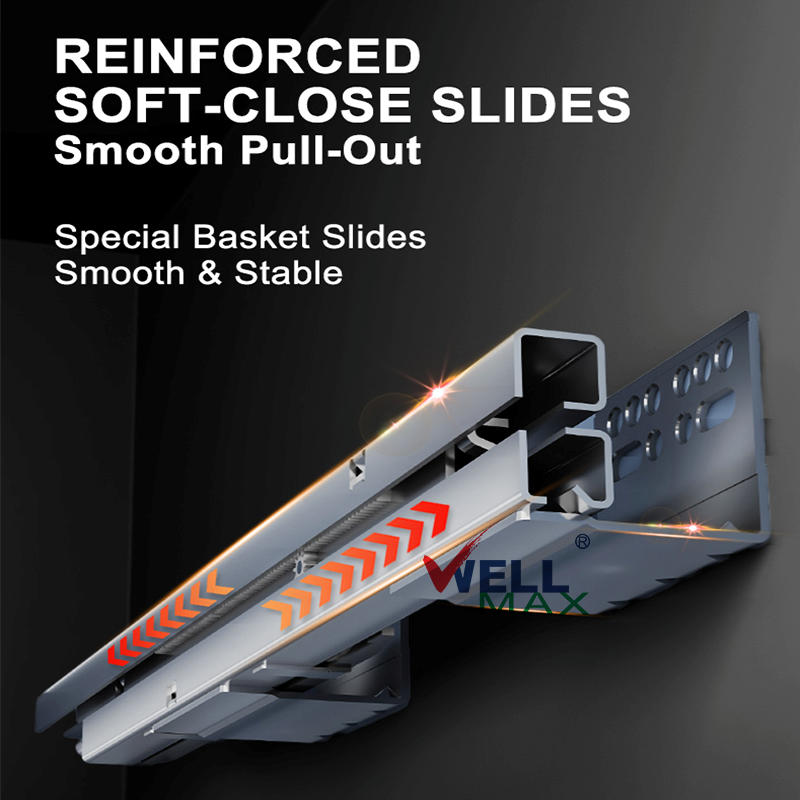
Precision Slide Alignment and Adjustment for Seamless Pull Out Drawer Movement
How Misaligned Slides Cause Sticking, Binding, and Uneven Travel
When there's even a small misalignment, it creates uneven pressure on bearings or rollers which leads to friction hotspots. These spots can cause things to stick, parts to wear out faster than normal, and movement to become inconsistent. What happens is binding when the load isn't balanced right and starts warping those slide rails. And we see uneven travel showing up as drawers tilting or getting stuck altogether. Looking at what industry research tells us, slides that aren't aligned properly tend to shorten the life of hardware components by around 60% when compared with systems that have been correctly calibrated from the start.
Step-by-Step Adjustment for Cabinet-Mounted and Undermount Pull Out Drawer Slides
- Loosen mounting screws slightly using a #2 Phillips screwdriver
- Check level alignment: Place a carpenter’s level across drawer fronts
- Adjust slide position: Tap rails gently with a rubber mallet until gaps between drawer and cabinet are uniform
- Test movement: Open and close the drawer five times to validate smooth, consistent travel
- Retighten screws in diagonal sequence to prevent frame distortion
For undermount systems, verify clearance between the drawer bottom and cabinet frame exceeds 3 mm. Cabinet-mounted types require checking side-wall parallelism with calipers. Always consult the manufacturer’s guidelines for torque specifications—over-tightening can deform mounting brackets or strip threads.
Optimal Lubrication and Preventive Maintenance of Pull Out Drawer Slides
Choosing the Right Lubricant: Ball-Bearing vs. Roller-Wheel Pull Out Drawer Systems
Getting the right lubrication for different slide types matters a lot for performance. Ball bearing slides work great with a light coating of silicone spray. The dry film version gets into all the nooks without picking up dust particles, which keeps friction down and prevents dirt from building up over time. For roller wheel systems, applying a thin layer of grease along the entire wheel path helps maintain proper weight balance across the system. Stay away from petroleum based oils though. These tend to break down the rubber components and create sticky residue when pressure builds up during operation. Studies in the material handling field show that using wrong lubricants can actually triple component wear rates within just about a year and a half of regular use.
Debris Removal Best Practices: Beyond Vacuuming for Long-Term Smoothness
Getting rid of all that built up gunk is where good maintenance really begins. Blow out those slide channels with compressed air first to knock loose any stubborn particles stuck in there. Then apply a silicone based coating that actually keeps dust at bay instead of just sitting on top. Kitchen areas are different though since they collect so much food grime and grease over time. For these spaces, do a full deep clean every three months using microfiber cloths dampened with solvent cleaner, then remember to lubricate properly afterwards. Studies looking at equipment longevity show that when people stick to this kind of maintenance schedule twice a year, they cut down on breakdowns by about two thirds give or take. Don't forget to check the slides themselves while cleaning too. Look out for any signs of bending, rust spots, or other damage that might not be obvious at first glance.
Critical Design Factors That Determine Pull Out Drawer Smoothness and Durability
Ball Bearings vs. Nylon Rollers: Friction, Load Capacity, and Service Life Trade-offs
When choosing between ball bearing and nylon roller slides, this decision really impacts how well they perform, what kind of weight they can handle, and how long they'll last overall. Ball bearing systems create almost no friction at all (around 0.002 coefficient) which means things slide smoothly even when carrying over 100 pounds. These systems typically last between 50 thousand to 100 thousand cycles, making them great for busy kitchen environments where drawers get opened and closed constantly. Nylon rollers are cheaper to manufacture and won't rust, but they have much higher friction levels (between 0.05 and 0.10). Because of this, nylon slides struggle with heavier items above 30-50 pounds and tend to wear out faster after about 15 thousand to 30 thousand uses. Tests show that nylon materials actually start to bend and warp when subjected to constant heavy pressure, causing drawers to sag or become misaligned over time. Ball bearings keep their shape better since the weight gets spread across multiple contact points rather than concentrated in one spot.
Material science reveals inherent trade-offs:
| Factor | Ball Bearings | Nylon Rollers |
|---|---|---|
| Dynamic Friction | 10–25% lower resistance | Moderate–high resistance |
| Max Load Capacity | 60–100+ lbs | 30–50 lbs |
| Service Life | 50k–100k cycles | 15k–30k cycles |
| Environment Fit | Humidity-controlled spaces | Moisture-prone areas |
While ball-bearing systems carry a 40–60% manufacturing cost premium, their silent operation, reliability over a decade, and extended maintenance intervals justify the investment where performance and safety are non-negotiable.
Diagnosing and Resolving Common Pull Out Drawer Performance Issues
From Noise to Safety Risks: Identifying Root Causes Like Loose Mounting or Frame Warping
When drawers start making constant rattling sounds, grinding noises, or suddenly get stuck, these are red flags pointing to bigger problems inside. Most drawer troubles actually come from something pretty simple: loose mounting screws. According to the Furniture Safety Council report from last year, around 43% of all drawer issues stem from this exact cause. These loose connections create wobbling that gets louder over time and wears down parts faster than they should. Even worse is when the frame itself starts warping. This usually happens because of water getting in somewhere or people putting too much weight in there regularly. Once the frame bends even slightly off square, maybe just 3 mm, it completely messes up how the drawer moves. The result? A lot more resistance when opening and closing, sometimes as much as 70% extra force needed. And that's dangerous stuff folks - we're talking about fingers getting pinched unexpectedly, drawers dropping without warning, and worst case scenario, entire drawers coming loose from their tracks.
Diagnosis begins with three targeted checks:
- Operational testing: Listen for grinding or hesitation during full extension/retraction
- Visual inspection: Look for gaps at cabinet corners or visible bowing in side panels
- Torque verification: Confirm all mounting hardware meets the manufacturer’s specified torque values
Early identification prevents minor inconsistencies from escalating into safety hazards or costly repairs—preserving both function and user safety over the drawer’s full service life.
FAQ Section
What causes pull out drawers to stick or bind?
Sticking or binding in pull out drawers often results from misaligned slides creating friction hotspots. Uneven pressure on slide components can also create turbulence, leading to drawers tilting or getting stuck.
How can I adjust misaligned drawer slides?
To adjust misaligned drawer slides, loosen mounting screws with a #2 Phillips screwdriver, check level alignment using a carpenter's level, gently reposition the slide rails, and retighten screws in a diagonal sequence.
What lubricant is best for different drawer slide systems?
Ball bearing slides benefit from silicone spray, while roller wheel systems function well with a thin layer of grease. Avoid petroleum-based oils as they can break down rubber and create sticky residue.
How often should drawer slides be cleaned and lubricated?
For optimal performance, perform a deep clean and lubrication of drawer slides every three months, especially in kitchen areas prone to food grime and grease buildup.
How do I diagnose drawer performance issues?
Diagnose performance issues by listening for unusual noises, inspecting mounting hardware and frame alignment, and verifying torque specifications against manufacturer guidelines.
Table of Contents
- Precision Slide Alignment and Adjustment for Seamless Pull Out Drawer Movement
- Optimal Lubrication and Preventive Maintenance of Pull Out Drawer Slides
- Critical Design Factors That Determine Pull Out Drawer Smoothness and Durability
- Diagnosing and Resolving Common Pull Out Drawer Performance Issues
- FAQ Section