
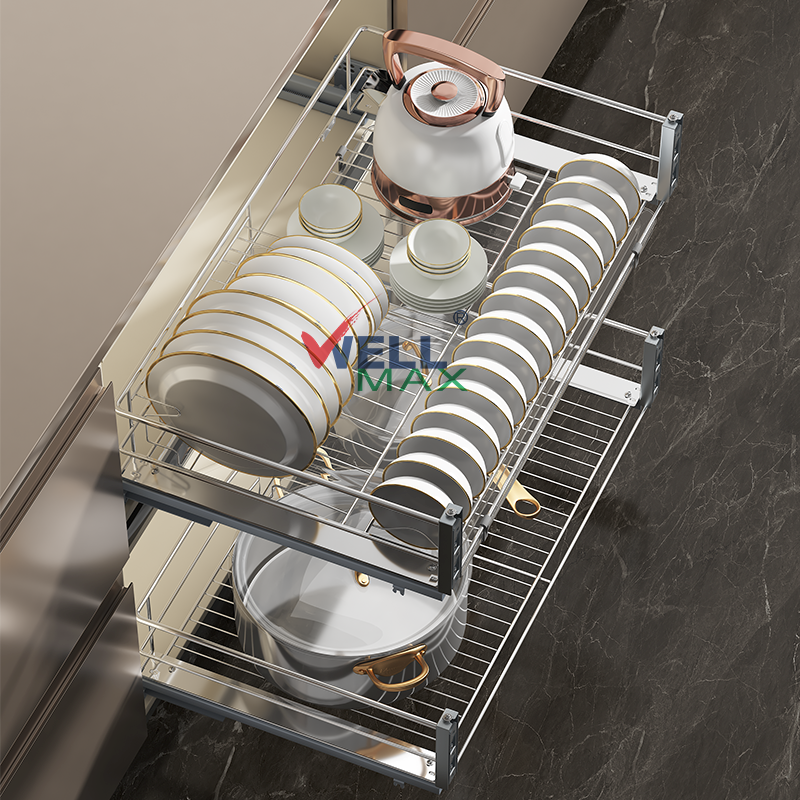
Drawer Basket Types: Matching Material and Design to Dish Protection
Wire, Solid, and Hybrid Drawer Basket Designs — Pros and Cons for Dish Safety
The choice of drawer basket design really matters when it comes to keeping dishes safe through regular kitchen use. Wire baskets let air circulate freely which is super important for ceramics and porcelain that tend to develop water spots otherwise. Plus, those open spaces make it easy to spot plates and bowls stacked inside at a glance. But there’s a catch too. Thin wire grids don’t give much actual contact area so delicate glassware can chip easily when someone reaches in to grab them. Solid baskets, on the other hand, offer complete cushioning across the whole surface making them great for fragile wine glasses or old family china sets. They do have one downside though - sometimes they trap moisture if there’s no built-in ventilation system. Some newer hybrid models actually combine the best features. These typically feature strong wire frames combined with polymer-coated inserts that manage both airflow and shock absorption pretty well. When dealing with heavy dish loads over 25 pounds, look for baskets with steel-reinforced corners. This prevents the whole thing from sagging down over time which leads to misaligned items and eventual breakages.
Stainless Steel, Bamboo, and Coated Steel — Durability, Hygiene, and Corrosion Resistance
What materials we choose really affects how well things hold up in kitchens where there’s lots of moisture around. Stainless steel drawers can stand up to all those water splashes during dishwashing without corroding, plus they stay clean since their surface doesn’t absorb stuff easily. Bamboo is another option that brings some warmth and has natural properties that fight microbes, although it needs regular sealing to stop steam from making it warp over time. Some coated steel versions come with powder finishes that resist scratches and let us pick colors we like, but when those coatings start to wear off, rust becomes a problem. Households that tend to use strong cleaning products should go for grade 304 stainless steel because studies show it knocks down bacteria by nearly 99.9 percent according to research published last year. When looking at construction details, welded joints work better than rivets for keeping food particles from getting stuck, especially close to sink areas where water tends to collect.
| Material | Dish Protection Strength | Moisture Resistance | Maintenance Needs |
|---|---|---|---|
| Stainless Steel | High impact resistance | Excellent | Low; wipe clean |
| Bamboo | Moderate (soft surface) | Good (when sealed) | Medium; periodic oiling |
| Coated Steel | Varies by coating quality | Good | Medium; avoid abrasives |
Sizing and Load Capacity: Ensuring Your Drawer Basket Fits and Supports Real Dish Loads
Measuring Drawer Interiors vs. Dish Stack Profiles (Plates, Bowls, Platters)
Getting accurate measurements of the inside of your drawer is really important if you want good results when storing dishes. Grab a tape measure and note down three key numbers: how wide it is from side to side, how deep from front to back, and how tall from bottom to top. Don’t forget to subtract about half an inch from all those numbers since there needs to be room for glides and brackets to fit properly. Now look at what kind of dishes you have sitting around. Regular plates stacked together usually need somewhere between 10 and 12 inches of vertical space, but big serving platters or those fancy oversized bowls will definitely need more depth from front to back. Think about how efficiently things can nest together too. Shallow soup bowls don’t take up much vertical room but they do need plenty of horizontal space to sit flat without tipping over. Before spending money on anything, try making a quick cardboard model based on your measurements. We’ve seen so many cases where people end up crowding their drawers because the dimensions just weren’t quite right, and that leads to chipped edges on glasses and stressed ceramicware over time.
Why 25—40 lbs Load Capacity Is Essential for Dish-Heavy Drawer Basket Use
Ceramic and stoneware dishes are seriously heavy stuff that most kitchen organizers just aren’t built to handle properly. Take your average dinner plate weighing somewhere between 1.5 to 2.5 pounds. Stack twelve of those together and suddenly we’re talking about 18 to 30 pounds right there. Throw in some bowls, coffee mugs, and those big serving platters people love collecting, and it’s easy to hit around 40 pounds in one drawer before even thinking about silverware. Studies indicate kitchens relying on regular dish storage solutions face about seven times more problems with broken hardware compared to those using baskets designed for at least 25 pounds. The steel-reinforced ones that can take 25 up to 40 pounds really make a difference. They stop the slow bending that eventually twists up the slides, keep things from crashing down unexpectedly, and let drawers open and close smoothly without getting stuck. When storing all those fancy porcelain and stoneware pieces, better go for something sturdy rather than something pretty looking.
Organization Features That Prevent Damage and Maximize Accessibility
Compartmentalized and Adjustable Drawer Basket Layouts for Stemware, Cookware, and Delicates
Dividers that can be customized help set aside special spaces where delicate glassware stays safe from chips and heavy pans don’t move around. The adjustable sections grow right along with what’s in someone’s kitchen collection. A spot for tiny teacups looks nothing like what works for big cooking pots. Kitchen organizers claim these setups cut down on things bumping into each other by about three quarters based on research they’ve published together. That means fewer scratches when reaching for stuff. Plus, the way these storage systems are built lets air circulate better around wet dishes so mold doesn’t get started. Some folks prefer bamboo options while others go for steel with coatings because both materials naturally fight off bacteria growth over time.
Full-Extension Glides and Smooth Pull-Out Mechanics in High-Use Kitchen Workflows
Drawer slides with soft close features and full extension really fix that annoying problem where dishes just tumble out when opening drawers suddenly. This matters a lot for those wobbly setups we all have with little ramekins stacked on top of each other or bowls nested together. The best part? They give complete access to everything at the back of the drawer without any strain on the hands or arms. Kitchen studies actually show these slides cut down on accidental spills and messes by almost two thirds according to various safety reports. The dual track ball bearings can handle pretty heavy stuff too - think about all those dinner plates and glassware we pile in there day after day. These systems keep running smoothly even after hundreds of openings and closings, so no more stuck drawers crushing delicate bakeware. And let’s not forget the handles themselves. Designed for comfort, they make it easy to grab and pull open with just one hand while juggling groceries or cooking ingredients in the other.
FAQ
What are the advantages of hybrid drawer baskets?
Hybrid drawer baskets combine wire frames with polymer-coated inserts for both airflow and shock absorption, making them ideal for keeping dishes safe.
How often should bamboo drawer baskets be sealed?
Bamboo drawer baskets should be regularly sealed to prevent moisture from warping the material over time.
Why is stainless steel recommended for kitchens?
Stainless steel is recommended due to its excellent corrosion resistance and ability to reduce bacteria by about 99.9%, making it ideal for hygienic kitchen conditions.
How can you measure drawer interiors accurately?
Use a tape measure to record the width, depth, and height of the drawer, subtracting about half an inch to accommodate glides and brackets.
Why is a 25—40 lbs load capacity important for drawer baskets?
A load capacity of 25—40 lbs ensures that drawer baskets can handle heavy dish loads without sagging or causing damage.