
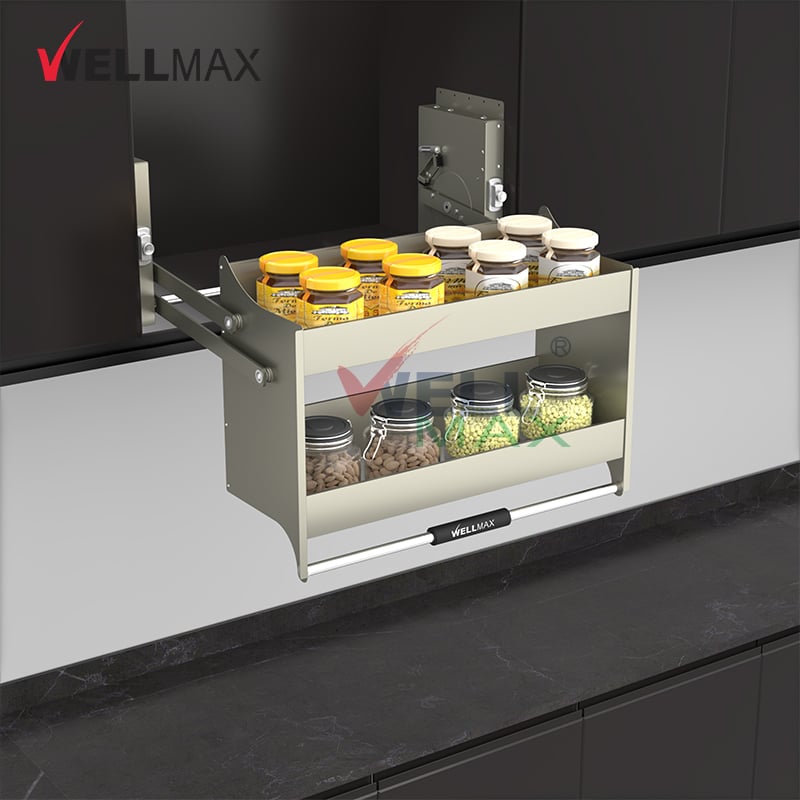
How a Pull Down Shelf Works: Mechanism, Types, and Cabinet Compatibility
Core Operation: Gas Struts, Spring Systems, and Smooth One-Handed Deployment
Most pull down shelves work thanks to either gas struts or those spring based counterbalance systems that make them move up and down so smoothly. When someone pulls the shelf down, the mechanism actually captures some of that gravity force and then lets it go back out again as the shelf goes up. This means people can open and close these shelves with just one hand, even if they're carrying heavy stuff. The manufacturers have also added integrated handles which really help with stability. Plus there are those precision aligned tracks that stop things from shaking around too much. Some models come with optional dampers too, which slow things down at the end of the motion. This prevents dishes from getting damaged when the shelf closes suddenly after being used throughout the day.
Fixed-Mount vs. Motorized Pull Down Shelf Options for Residential Kitchens
- Fixed-mount systems: Use mechanical tension springs or hydraulic lifts to support 15–50 lb loads. They’re cost-effective, require no wiring, and suit users who prioritize simple height adjustment over automation.
- Motorized variants: Feature quiet electric actuators with touch or voice activation, stopping automatically at preset heights. Ideal for heavier items like stand mixers, they demand accessible power sources and add roughly 30% to the project cost due to smart-home integration and enhanced build quality.
Both types convert static overhead storage into functional, accessible zones—choosing between them hinges on budget, technical readiness, and long-term usability goals.
Installation Fit: Ensuring Compatibility with Standard 12–15" Deep Upper Cabinets
Accurate internal cabinet measurements are essential. Most pull down shelves fit standard upper cabinets (12"–15" deep) provided that:
- Side walls can securely anchor mounting plates;
- At least 14" of unobstructed vertical clearance exists for full deployment;
- System depth ratings align with cabinet interior depth—especially important where backsplash tiles or under-cabinet lighting may interfere with 18" extension arms.
Always confirm weight capacity exceeds your heaviest stored item by at least 10% to avoid premature wear or failure of lifting components.
Safety and Accessibility: Why a Pull Down Shelf Reduces Risk and Supports Inclusive Design
Fall Prevention: How Pull Down Shelf Eliminates Stool Use and Ladder Dependency
Most kitchen slips and falls happen when people climb on stools or ladders to get stuff from high cabinets according to the Home Safety Council report from 2023, which puts the number at around 81%. Pull down shelves fix this problem by letting folks grab what they need without leaving the floor. People can reach those heavy pots or delicate glassware without wobbling around on unstable surfaces. These shelves use gas struts that make them move up and down smoothly instead of just dropping suddenly when someone lets go. Research into ergonomics found something interesting too. Households reported way fewer instances of back pain or muscle strain once these systems were installed. The average went down from about 9 times a week to just 1 or 2. So besides being easier to use, storing things overhead becomes much safer for everyone involved.
Aging-in-Place & ADA-Aligned Benefits for Mobility-Limited Users
Pull down shelves really help people stay in their homes longer as they age, and they work well with those ADA reach standards too when installed right. According to some research from last year, folks experience about half the shoulder strain when grabbing things from these pull downs instead of stretching up overhead. The design makes accessing items much easier on the body overall. What makes these shelves so great? They come with self leveling platforms that stop stuff from spilling out, adjustable tension settings that can handle weights around 25 pounds, plus handles that are gentle on hands for anyone dealing with arthritis or limited hand movement. Plus, studies show kitchen storage gets used about 47% more efficiently this way. Everything stays within sight and within reach, which turns ordinary kitchens into places where everyone feels comfortable and respected no matter their abilities.
Maximizing Upper Cabinet Storage with a Pull Down Shelf
Vertical Efficiency: Gaining Up to 40% More Usable Volume (NKBA Data)
Most traditional upper cabinets leave a lot of wasted space what people call dead zones. Studies show that on average homeowners only really use about 60% of the vertical space because reaching those high spots just isn't practical for daily living. That's where pull down shelves come in handy. These smart storage solutions let folks access every inch of cabinet depth and height thanks to their clever moving mechanism. According to research from the National Kitchen & Bath Association, installing such systems can actually boost usable storage space by as much as 40%, all without taking up any extra floor room. They do this magic trick by turning those hard to reach top shelves into something much more accessible and packed with stuff. For smaller kitchens where every square foot counts, this kind of space saving innovation makes a real difference in how functional the kitchen feels day after day.
Storing Small Appliances and Bulk Items Within Immediate Reach
Those big stand mixers and air fryers don't have to take over our precious counter real estate anymore. We've got these pull down shelves installed in the upper cabinets now. They hold around 25 pounds comfortably and bring everything down to counter level without much fuss at all. Even better? Our bulk pantry stuff like those heavy bags of flour, containers of rice, and cans of beans find a good home here too. No more digging through boxes or climbing on stools to grab what we need. Just rotate the shelf a bit and there it is! Less mess on counters, easier to keep track of what's stocked where, and honestly nobody forgets about food stored this way anymore. Traditional overhead storage always had that problem where things just disappeared until they expired.
Future-Ready Integration: Smart Features and Design Trends for Pull Down Shelf Systems
Sensor-Activated and Voice-Controlled Pull Down Shelf Options
The latest pull down shelves come equipped with motion sensors and voice controls so people can operate them without using their hands. When someone walks near, the shelves drop down on their own, which cuts down on back strain especially helpful for folks who have trouble moving around easily. Some models work right alongside Alexa and Google Home, letting homeowners adjust shelf heights just by speaking out loud. A lot of these newer designs also feature LED lights that turn on when someone opens the cabinet door, making it easier to see what's stored inside. According to a survey from last year, more than two thirds of people remodeling kitchens are looking for smart features like these. The frames themselves are made from strong aluminum similar to what's used in airplanes, so they hold up well even when loaded with heavy items plus all the electronic components. Looking ahead, we might soon see shelves that track what's stored in them through artificial intelligence technology. These would keep tabs on when food expires, how often things get used, and when supplies need replenishing.
FAQ Section
What are the primary mechanisms in a pull down shelf?
Pull down shelves typically use gas struts or spring-based counterbalance systems to facilitate smooth movement and one-handed operation, even when carrying heavy items.
What are the differences between fixed-mount and motorized pull down shelves?
Fixed-mount systems are cost-effective, using mechanical springs or hydraulic lifts. Motorized variants offer touch or voice activation with electric actuators, integrating well with smart home settings but typically costing more due to their advanced features.
How can I ensure compatibility with my cabinets?
Ensure your cabinets have secure side walls for mounting, at least 14" vertical clearance, and suitable depth ratings to match the system, especially if you have backsplash tiles or under-cabinet lighting.
How do pull down shelves enhance safety?
They reduce the need for stools or ladders, minimizing fall risks, and provide ergonomic benefits by lowering instances of back pain and muscle strain.
What are the accessibility benefits of pull down shelves?
These shelves comply with ADA standards, reducing shoulder strain and aiding people with arthritis or limited hand movement through features like self-leveling platforms and gentle handles.
How much more storage space can pull down shelves provide?
According to the National Kitchen & Bath Association, pull down shelves can increase usable storage space by up to 40% by making every inch of cabinet space accessible.
Do pull down shelves have modern smart features?
Yes, modern pull down shelves may include motion sensors, voice control, and integration with smart home systems like Alexa and Google Home, along with potential future AI tracking for inventory management.
Table of Contents
- How a Pull Down Shelf Works: Mechanism, Types, and Cabinet Compatibility
- Safety and Accessibility: Why a Pull Down Shelf Reduces Risk and Supports Inclusive Design
- Maximizing Upper Cabinet Storage with a Pull Down Shelf
- Future-Ready Integration: Smart Features and Design Trends for Pull Down Shelf Systems
-
FAQ Section
- What are the primary mechanisms in a pull down shelf?
- What are the differences between fixed-mount and motorized pull down shelves?
- How can I ensure compatibility with my cabinets?
- How do pull down shelves enhance safety?
- What are the accessibility benefits of pull down shelves?
- How much more storage space can pull down shelves provide?
- Do pull down shelves have modern smart features?